There is an ongoing and reasonably interesting debate about the Obama Administration's College Scorecard that I'd like to weigh in on, in order to draw out what's gone unsaid.
On one side of the debate are a set of elite college presidents who think the Scorecard's narrow focus on economic returns to the degree miss the mark; the college-going decision should be about more than getting a job. For example, Harvard President Drew Faust writes that "the focus in federal policy making and rhetoric on earnings data as the indicator of the value of higher education will further the growing perception that a college degree should be simply a ticket to a first job, rather than a passport to a lifetime of citizenship, opportunity, growth and change...Equating the value of education with the size of a first paycheck badly distorts broader principles and commitments essential to our society and our future."
On the other side are people like the Brookings Institution's Beth Akers, who argue that financial returns are critical to the assessment of whether college is worthwhile, especially for people without substantial family wealth, and that providing more information on economic returns is therefore important to influencing the college-going decision.
Both camps are partially right, in my view, and yet both are missing some critical points as well.
First, it is clear that college has multiple meanings and purposes for all students -- students from lower socioeconomic backgrounds seek access to a "lifetime of citizenship, opportunity, growth, and change" just as other students do. They are not aiming merely at a "first paycheck" -- in fact, if we present them with information on returns from the first paycheck, we won't be showing much economic return at all, since the payback to a bachelor's degree accrues over a lifetime, with the real value often not readily apparent until one's 30s or even 40s. The economic returns come mainly from job stability and retention, not the initial paychecks.
But try telling that to an 18 year old who simply wants a better life for herself, and sees college as the way to do it. The first step in that process, from her angle, is to get a degree that gets her employed. The upward path to social mobility, wherein she is employed longer and more consistently, and also has the knowledge and desire to bring her own children into postsecondary education--that's far down the road. And that's why Akers is right that this sort of information is valuable.
However, the main problem with the College Scorecard approach lies in its deceptively simple approach to the challenge. Even though the people creating it probably know that it's just a teeny tiny part of the fix, its mention in the President's State of the Union and attention it is getting reinforces a common perception that the college cost problem is mainly informational. Informational problems are fundamentally attributed to individual deficiencies rather than institutional or structural actions, and they are addressed in that manner. The College Scorecard equips the "student-consumer" so that they can make a "rational choice" in the face of a rich competitive marketplace. This framework is deeply problematic. Education is not a good like a car or a home. It means far more to people, and has transformative powers that other goods do not provide. The fundamental problem is that colleges and universities have been given strong incentives to act like businesses instead of sites of education, and this is magnified by the Scorecard.
A college education is a social good that actualizes the potential of all who enjoy it. I think President Obama knows this. He knows that a community comprised of college-educated parents feels and acts differently than one with less education. Given this, we cannot and should not address the college attainment problem in this country one person at a time by providing scorecards of information. We need our leadership to insist on a national conversation about social priorities, and insist on approaches to education that are fundamentally democratic-- and therefore public--and are socially just. We have to insist that a focus on equity is not only required but is more important than a focus on efficiency, since cost is not the only way to assess value, and when we say that it is, we prioritize efforts that keep the poor poor.
I am not naive-- the schooling system we have today reflects the state of our economic life, and the College Scorecard is merely a symptom of that status quo. But with each policy decision comes a set of choices, and in his last term, President Obama has the opportunity to initiate important changes in our economic life by rejecting the notion that the advantages held by the 1% trickle down to the rest of us, that the consumerism which suits them so well serves our interests too, and that our college opportunities should be guided by the same approach that their families embrace. Helping college opportunities achieve their potentially liberating ends requires leveraging governmental resources to pursue the provision of a free public education in which the value of college is clearly stated, provided by society to all of its membership.
Friday, March 15, 2013

Thursday, March 14, 2013
On What Matters: Blank vs. Schill
My email inbox has been filled today with notes from upset colleagues who seem to feel I've misjudged Rebecca Blank's capacity for leading UW-Madison. They don't understand, I'm told, how I can overlook her clear talents, deep commitments to social justice, and great scholarship.
I don't think I am. I don't doubt any of those things. This isn't about whether I like her or think she can do the job. The question is for which candidate -- Michael Schill or Rebecca Blank-- do we have the best evidence of success at UW-Madison.
I'd like to lay out more data for your consideration. These are the types of things that led to my assessment, and so I encourage you to look for yourself, and then provide your input by tonight! (The committee will vote in the morning). Write to: Chancellor-search@secfac.wisc.edu
The Badger Herald posed direct questions to the candidates. Here is how they responded.
Michael Schill: "There is nothing inconsistent with being a great educational institution and socioeconomic diversity. One of the things I was most proud of from my days at UCLA was that I was part of a great public university that led the nation in the percentage of students with Pell grants. Accessibility need not come at the cost of either student or faculty quality or of diversity. Low tuition and generous financial aid are two strategies to maintain accessibility. Excellence in education and research can be funded through increased state support, aggressive corporate and government grantsmanship, tech transfer, and a turbo-charged effort to promote philanthropic contributions."
Rebecca Blank: "Public universities in the United States have long provided both accessibility and excellence. That said, the reduced state support for these institutions in recent decades has resulted in greater pressure for tuition increases. UW faces these financial issues, as do almost all other big public universities. Dealing with these issues and continuing to provide both excellence and access is one of the major challenges in front of a new chancellor. There are several ways to deal with this, although none of these responses will fully alleviate the budget pressures that UW is currently facing. First, UW needs to work hard at expanding its funding sources other than tuition and state funding. While UW has been very successful in raising research dollars, I believe that it can do more in soliciting private donations to endowment. The Chancellor has to be the leader in this effort. Second, UW has to continue to make sure that children from low-income families in Wisconsin who are admitted to UW can afford to attend. This means providing financial aid to these students, so that higher tuition doesn’t make UW unaffordable. Third, the deans of UW’s different schools and colleges need to have the flexibility to attract an appropriate share of higher-tuition out-of-state students into their graduate, professional and undergraduate programs…and the ‘appropriate share’ should differ by school and by degree level."
Commentary: Blank talks about equity and excellence as distinct, while Schill frames them as one and the same. Blank talks about higher tuition and holding students harmless via financial aid (Biddy Martin's strategy), while Schill talks about "low tuition and generous financial aid." Blank says we need to work on things "other than tuition and state funding" while Schill begins with a focus on "increased state support."
Michael Schill: "The University of Wisconsin, as well as students throughout the state, can derive important benefits from being part of a great system. Shared resources, economies of scale, and seamless transfer practices are just a few of the ways that a close relationship with the UW system can achieve a win-win situation for all. Some level of flexibility for the campuses in certain areas is important, particularly when there is a need for speed of action or when the circumstances, market situations, and/or issues facing a particular campus are idiosyncratic. On the whole, I think many of the flexibilities included in the recent biennial budget as well as the recommendations of the recent Special Task Force on UW Restructuring and Operational Flexibilities make a great deal of sense and will benefit all of the schools in the University. Based upon my experience at UCLA, I believe that the best way to make the relationship between the Legislature, the central university system, and the individual campuses productive is to develop relationships of trust and good will. UW-Madison has a particular advantage in this vein since the system is headquartered in Van Hise Hall, just a few hundred yards from Bascom Hall. I anticipate that if I ever had a problem that required central assistance I would just get myself out of my chair and take a walk over to the President’s office and work things out."
Rebecca Blank: "Universities have certain unique organizational characteristics and I believe that it would be beneficial for the UW System to have greater flexibility in some key management decisions. For instance, faculty and many staff compete in a national academic marketplace, and retaining them often requires salary flexibility that government pay systems are not designed to provide. So I’m pleased that this discussion about administrative flexibility is ongoing within the state. The University of Michigan, where I served as dean, has much greater autonomy and UM staff and faculty are not state employees, so these issues did not arise in the same way at that institution."
Commentary : It is not clear that Blank knows that Biddy Martin's efforts to gain "administrative flexibility" ended her tenure. Schill is evidently aware of it, and emphasizing the benefits of a close relationship with system. Blank mentions that Michigan, where she has experience, is unlike Madison in important ways-- and she's right.
Wednesday, March 13, 2013
Rebecca Blank: Not Quite Right for UW-Madison Chancellor
As a social scientist engaged in poverty research, I wanted very much to like and welcome Rebecca Blank to campus. When the list was announced, I immediately expressed positive feelings-- she was well-liked the last time she came to campus. Her colleagues and friends adore her, and came out in droves to meet with her today. People whom I respect immensely, including Bobbi Wolfe, Bob Haveman, Chris Taber, Karl Scholz and Tim Smeeding, are very supportive of her. Should she come, she'd join them as economists and colleagues at the Institute for Research on Poverty, and undoubtedly help to grow that part of the university.
Unfortunately, given that my first priority is not my corner of campus but rather helping to ensure that Wisconsin's great public flagship university is led by someone who wants it to serve all of the people of Wisconsin, I cannot support the candidacy of this undoubtedly outstanding researcher and public servant. I gave her the same litmus test I used with Mike Schill last week, and not only did she fail, but she failed in the same exact manner that Biddy Martin did several years ago.
Frankly, when it comes to higher education affordability, I can't tell these two women apart.

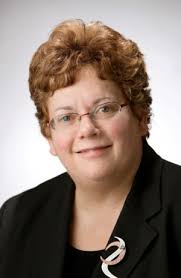
Unfortunately, given that my first priority is not my corner of campus but rather helping to ensure that Wisconsin's great public flagship university is led by someone who wants it to serve all of the people of Wisconsin, I cannot support the candidacy of this undoubtedly outstanding researcher and public servant. I gave her the same litmus test I used with Mike Schill last week, and not only did she fail, but she failed in the same exact manner that Biddy Martin did several years ago.
Frankly, when it comes to higher education affordability, I can't tell these two women apart.
Here's how our conversation went:
SGR: "Hi, It's so nice to finally meet you! We have many friends and colleagues in common. I'm Sara Goldrick-Rab."
RB: "Nice to meet you too. Are you a professor here?"
SGR: "Yes, in Educational Policy and Sociology. So, I know we have just a moment but I want to ask you about affordability."
RB: "Affordability? What kind, housing, or...?"
SGR: "Education. How to help students afford college. When you were here several years ago, you expressed the opinion that our tuition at Madison was too low, and should be raised at least to be on par with our peers. I'm curious, since time has passed and you've been in Washington, how are you currently thinking about this issue?"
RB: "Well, it's not about tuition. That's the first thing-- we shouldn't talk about the sticker price. It doesn't matter. What we need to focus on is the redistribution-- we need to get the resources from the wealthy families and be sure that the poor ones pay a low price. Sticker price doesn't matter at all."
SGR: "Oh. So you think our sticker price could be higher than it is now?"
RB: "Well, I don't know about Wisconsin. I have no idea what the situation is here, maybe having moderate in-state tuition is about right. But I'm an economist, and so I think about redistribution. We can redistribute money and make college affordable. And we have to think about all of the tuition-- we should be charging what our peers do for out-of-state students, no less. And the Business school tuition, that should be high. We can play with lots of kinds of tuition before dealing with the in-state one, but that all depends on what peoples' tolerance is."
SGR: "Hm. Do you think that strategy works? What's the evidence on that?"
RB: "Well, we see it in North Carolina, with the Carolina Covenant. That's a very important symbolic policy, promising students they can afford it."
SGR: "Is it effective?"
RB: "Well, I think so. Maybe not in Wisconsin, I don't know. Well, thanks, I enjoyed meeting you!"
SGR: "You too."
I believe this conversation holds two lessons:
1. Blank did not do her homework. She is unaware of the major debates around affordability and how it is achieved both nationally and locally. She has not taken the time to read about the Madison Initiative for Undergraduates or discussions about tuition caps. She has not spent time googling to read about local politics. She isn't up to speed.
2. On affordability, yes, Blank sounds like many economists (though not all). Her conclusions are based evidence mainly from the late 1980s, when college tuition was much lower and the student composition was much less diverse. In fact there is no evidence that the Carolina Covenant (at UNC-Chapel Hill, where I suspect Blank is already a candidate for chancellor) has been effective (there's been just one, non-rigorous evaluation and UNC retains its reputation as a gated community). Reasonable people disagree on the effectiveness of this redistribution approach-- it is far from a resolved debate, as she implies. Her rejection of "sticker shock" as an important consideration is out of step with the Obama Administration, which is taking it quite seriously. And the latest evidence from Wisconsin and elsewhere suggests that program complexity, which is not easily resolved, is rendering the impacts of redistribution nearly meaningless--and just as importantly may be providing little incentive for colleges and universities to keep costs down.
These are precisely the issues on which I tangled with Biddy Martin. Again, reasonable people can disagree on these issues, so what alarms me is that, like Biddy, Becky speaks with great confidence on this issue. Moreover, she went so far as to invoke her status and perspective as an economist, which for many people "settles" the debate (Biddy did the same by telling me she'd talked with Ron Ehrenberg, her friend the economist, and welcoming support from the Econ department in her debates with me). She responded like an expert, yet she obviously hasn't studied the issue. Why not simply admit that and note that it needs to be studied? Why not ask about how things are going here? In fact, four years after Martin's arrival and her initiative to raise tuition, the enrollment rates of first generation students and students of color are dropping, and we are shifting to an ever-elite student body. While we can't pin that on our rising prices with certainty, we also can't reject the reasonableness of that hypothesis.
Moreover, since I was her conversational partner, and she isn't an expert, why didn't she ask what I thought? That would have been an alternative, reasonable response. But unlike Mike Schill, Rebecca Blank did not spend much time with her visitors today. She leaned slightly back with most, and rocked back and forth on her heels a bit. Her eye contact was limited, and each person moved on after about 90 seconds. Much as I think it would be nice for the social sciences here to have her, I'm ready to move on too.
With that, I am expressing great hope that Michael Schill will be the next chancellor of UW-Madison.
Tuesday, March 12, 2013
March Madness: When Learning Time Meets Athletics

He's in kindergarten this year. I find his school to be a nurturing environment with a solid focus on learning and a similar focus on community and respect for others. His school was recently recognized by the state for its overall academic achievement and for being in the top 10% of state Title I schools for achievement growth in math and reading.
But his school - and the entire school district - made a curious decision last Friday. As a result of the high school boys' basketball team making it into the state tournament, school was released early (just after lunch), eliminating about 150 minutes of academic time. Parents were given four days notice that this was going to happen.
I think it this was an attempt to encourage community pride. A note came home in my son's folder and an email was circulated encouraging families to support the high school athletes by attending the state championship game mid-afternoon on Friday. But it fell flat on me. And it actually deeply disappointed me. Maybe I'm just no fun.
Learning time is precious and it should be foregone sparingly. I don't find a state high school basketball game to be a convincing reason. I attribute this decision to the seldom questioned athletic culture, alive and well in Wisconsin and America, that seems to take precedence. Why don't we ever cancel classes in this way on Election Day (to allow students to observe the voting process and see their parents participate)? Something like that, for me, rises to a similar level of importance as class time.
Now, a sense of community is important, too. And athletics is part of that fabric. But, in this case, unlike Super Bowl parties or Packers games that take place during most folks' non-working hours and allow families and neighbors to come together and "support the team" (and drink beer and eat brats), I bet that few elementary school students and their families - especially with four days notice - took off a half day of work to attend a basketball game on a Friday afternoon in March. I know that my wife and I did not. We paid $15 extra to the after-school program to have my son for extra hours so we could work. For some less well-off families, this last-minute schedule change may have presented an unwelcome inconvenience and an unfair financial burden.
I think a more preferable decision might have been to encourage families who wished to or had older siblings enrolled in the high school to attend the game and to offer excused absences for their children.
Now, why are some state boys basketball tournament games even played during school hours, forcing the hand of school districts in this way? That's a question for the Wisconsin Interscholastic Athletic Association and its membership -- public and private high schools and middle schools across the Badger State.
Let's get our priorities straight, folks.
Sunday, March 10, 2013
Enrollment Management at UW-Madison: What Story Do the Numbers Tell?
Working on some shared governance tasks this evening, and time with this data really got me thinking.

For the first time, probably in UW-Madison's history, we are enrolling more legacy students than first-generation students.
Enrollment of Wisconsin residents is at an historic low, while enrollment of international students is at an historic high.
Enrollment is a function of applications, admit rates, and yield. Arguably, changes in policies around cost and campus climate (e.g. the Madison Initiative for Undergraduates-- see below) most often affect the yield. So let's look at the yield rates-- the percent of students who accept the admissions offer and choose to attend Madison. They are quite stable for some groups, but declining for others.

By the numbers, of the 6,279 new freshmen who enrolled at UW-Madison in 2012:
1,119 are children of parents who attended UW-Madison
1,033 do not have a college-educated parent
609 are not from the United States
269 are Hispanic
143 are African American
101 are Southeast Asian
51 are American Indian
Of note:
Biddy Martin became chancellor of Madison on June 5, 2008. Her Madison Initiative for Undergraduates, which increased campus tuition, began in 2009. She explicitly targeted enrollment growth among first generation and international students. She left the university in June 2011 but her enrollment policies remain intact to this day. What do these numbers have to say about her legacy?
Enrollment of Wisconsin residents is at an historic low, while enrollment of international students is at an historic high.
Enrollment is a function of applications, admit rates, and yield. Arguably, changes in policies around cost and campus climate (e.g. the Madison Initiative for Undergraduates-- see below) most often affect the yield. So let's look at the yield rates-- the percent of students who accept the admissions offer and choose to attend Madison. They are quite stable for some groups, but declining for others.
By the numbers, of the 6,279 new freshmen who enrolled at UW-Madison in 2012:
1,119 are children of parents who attended UW-Madison
1,033 do not have a college-educated parent
609 are not from the United States
269 are Hispanic
143 are African American
101 are Southeast Asian
51 are American Indian
Of note:
Biddy Martin became chancellor of Madison on June 5, 2008. Her Madison Initiative for Undergraduates, which increased campus tuition, began in 2009. She explicitly targeted enrollment growth among first generation and international students. She left the university in June 2011 but her enrollment policies remain intact to this day. What do these numbers have to say about her legacy?
Friday, March 8, 2013
Make College Free
It is long past time to make college free, and thankfully the Atlantic writer Jordan Weissman just laid out the case very nicely.
Jordan points out that the money invested in our financial aid system could instead be invested in appropriations to public colleges and universities to drive down costs. Yes, aid to private colleges would end. Oh well! Why do we pay for private colleges when we don't pay for private high schools? (Well, we are starting too but we should stop.) And yes, we need to cover costs of attendance for the poorest students too and we can do that by charging very low tuition to rich kids to give to poor kids (for whom tuition is free)-- and that's a progressive tuition structure rather than this incredibly deceptive price discounting scheme we now have in place.
As I've been pointing out in talks around the country on the subject "When America Goes to College," our current system of affordability was developed at a time when the college-going population largely had advantaged parents who understood and had faith in the system, and when costs of attendance were much lower, and thus sticker shock wasn't so rampant. That approach recognizes that colleges costs are a barrier to attendance but allows those costs of attendance to be determined by colleges and universities, with some input from states. Those costs of attendance are then discounted with financial aid and that aid is distributed directly to students, not to colleges. Therefore, accessing aid requires substantial action and responsibility on part of the student.
That model makes several assumptions:
For example, discounting college costs with financial aid is far more complicated than discounting the price of a movie ticket with a student ID (a classic example of price discounting). For one, you have to file a FAFSA to get the discount-- and until you do it, you have no idea what discount you'll get. For another, you have to trust the government and the school to give you the discount. And with all the mistreatment of low-income families in this country, why would they?
Another issue is that the discount itself has changed over time. We moved from aid in the form of grants to aid in the form of loans, and those do not mean equal things to students or have equal effects. In addition, we have witnessed a proliferation of grants and scholarships with a multitude of requirements (which can conflict in unproductive ways), and from an array of sources, such that students have no idea who's helping them go to college and why, or how long they can count on the support. Aid shifts from year to year, seemingly without warning, and often declines unexpectedly. Students from poor families have little ability to smooth their consumption and adjust to these shocks, and this perpetuates the feeling that aid is untrustworthy.
Perhaps even more importantly, in our effort to ensure that the discount is well-targeted, we've create a monster of program complexity. An industry has grown in order to help students process the FAFSA and yet it's still not working. The formula penalizes students for temporary improvements in their parents' income, even when they will not realize those gains (e.g. when dad finally gets a job after 5 years, it's not likely he can share that new money with you as he struggles to pay off bills, and yet you lose your Pell). And it assumes monetary exchanges between family members that are based on a 2-parent household with middle-class norms-- e.g. parents provide money to kids and expect nothing in return.
What an absolute mess.
If we really wanted to make college affordable, we would direct all dollars towards providing one good affordable option for everyone. We would focus less on choice and more on access to a real outcome- a degree. We wouldn't let aid flow to private or for-profit schools, and by funding public institutions we'd hold them accountable for keeping costs low and campus-climates reasonable so that everyone can fully participate in the experiences.
I thank people like Jordan for putting big bold ideas like free college on the table and making it possible to surface the real issue: most Americans want college to be a privilege and not a right because they care more about "getting ahead" then creating an equitable society in which we live as a community. To get ahead requires leaving someone else behind, and higher education has come to be a major way in which Americans work on doing just that.
Jordan points out that the money invested in our financial aid system could instead be invested in appropriations to public colleges and universities to drive down costs. Yes, aid to private colleges would end. Oh well! Why do we pay for private colleges when we don't pay for private high schools? (Well, we are starting too but we should stop.) And yes, we need to cover costs of attendance for the poorest students too and we can do that by charging very low tuition to rich kids to give to poor kids (for whom tuition is free)-- and that's a progressive tuition structure rather than this incredibly deceptive price discounting scheme we now have in place.
As I've been pointing out in talks around the country on the subject "When America Goes to College," our current system of affordability was developed at a time when the college-going population largely had advantaged parents who understood and had faith in the system, and when costs of attendance were much lower, and thus sticker shock wasn't so rampant. That approach recognizes that colleges costs are a barrier to attendance but allows those costs of attendance to be determined by colleges and universities, with some input from states. Those costs of attendance are then discounted with financial aid and that aid is distributed directly to students, not to colleges. Therefore, accessing aid requires substantial action and responsibility on part of the student.
That model makes several assumptions:
- Equitable access to postsecondary education will be achieved via price discrimination and redistribution
- Some students will pay more than others, and the extra money will go to needy students via financial aid
- Needy students will respond to the discounted price –the lowered cost of attendance will make the benefits more evidently attractive
For example, discounting college costs with financial aid is far more complicated than discounting the price of a movie ticket with a student ID (a classic example of price discounting). For one, you have to file a FAFSA to get the discount-- and until you do it, you have no idea what discount you'll get. For another, you have to trust the government and the school to give you the discount. And with all the mistreatment of low-income families in this country, why would they?
Another issue is that the discount itself has changed over time. We moved from aid in the form of grants to aid in the form of loans, and those do not mean equal things to students or have equal effects. In addition, we have witnessed a proliferation of grants and scholarships with a multitude of requirements (which can conflict in unproductive ways), and from an array of sources, such that students have no idea who's helping them go to college and why, or how long they can count on the support. Aid shifts from year to year, seemingly without warning, and often declines unexpectedly. Students from poor families have little ability to smooth their consumption and adjust to these shocks, and this perpetuates the feeling that aid is untrustworthy.
Perhaps even more importantly, in our effort to ensure that the discount is well-targeted, we've create a monster of program complexity. An industry has grown in order to help students process the FAFSA and yet it's still not working. The formula penalizes students for temporary improvements in their parents' income, even when they will not realize those gains (e.g. when dad finally gets a job after 5 years, it's not likely he can share that new money with you as he struggles to pay off bills, and yet you lose your Pell). And it assumes monetary exchanges between family members that are based on a 2-parent household with middle-class norms-- e.g. parents provide money to kids and expect nothing in return.
What an absolute mess.
If we really wanted to make college affordable, we would direct all dollars towards providing one good affordable option for everyone. We would focus less on choice and more on access to a real outcome- a degree. We wouldn't let aid flow to private or for-profit schools, and by funding public institutions we'd hold them accountable for keeping costs low and campus-climates reasonable so that everyone can fully participate in the experiences.
I thank people like Jordan for putting big bold ideas like free college on the table and making it possible to surface the real issue: most Americans want college to be a privilege and not a right because they care more about "getting ahead" then creating an equitable society in which we live as a community. To get ahead requires leaving someone else behind, and higher education has come to be a major way in which Americans work on doing just that.
Thursday, March 7, 2013
Dear Parent on your iPhone
I received this on Facebook tonight, credited to a "Marshall Miller." It was originally about moms, but that's not fair, so I've retitled it and share it here. It really hit home for me. How about you?
Dear Parent On Your iPhone,
I see you over there on the bench, messing on your iPhone. It feels good to relax a little while your kids have fun in the sunshine, doesn’t it? You are doing a great job with your kids, you work hard, you teach them manners, have them do their chores.
But let me tell you what you don’t see right now…..
Your little girl is spinning round and round, making her dress twirl. She is such a little beauty queen already, the sun shining behind her long hair. She keeps glancing your way to see if you are watching her.
You aren’t.
Your little boy keeps shouting, “Hey watch this!” I see you acknowledge him, barely glancing his way.
He sees that too. His shoulders slump, but only for a moment, as he finds the next cool thing to do.
Now you are pushing your baby in the swing. She loves it! Cooing and smiling with every push. You don’t see her though, do you? Your head is bent, your eyes on your phone as you absently push her swing.
Talk to her. Tell her about the clouds. The Creator who made them. Tickle her tummy when she comes near you and enjoy that baby belly laugh that leaves far too quickly.
Put your eyes back on your prize…Your kids.
Show them that they are the priority. Wherever you are, be ALL there. I am not saying it’s not ok to check in on your phone, but it’s a time-sucker: User Beware!
Play time at the park will be over before you know it.
The childhood of your children will be gone before you know it.
They won’t always want to come to the park with you. They won’t always spin and twirl to make their new dress swish, they won’t always call out, “WATCH ME!”
There will come a point when they stop trying, stop calling your name, stop bothering to interrupt your phone time.
Because they know…
You’ve shown them, all these moments, that the phone is more important than they are. They see you looking at it at while waiting to pick up brother from school, during playtime, at the dinner table, at bedtime…..
I know that’s not true.
I know your heart says differently.
But your kids can’t hear your words. Your actions are screaming way too loudly.
May our eyes rest upon those we love, first and foremost, and may everything else fall away in the wonderful, noisy, sticky-fingered glory of it all.
Dear Parent On Your iPhone,
I see you over there on the bench, messing on your iPhone. It feels good to relax a little while your kids have fun in the sunshine, doesn’t it? You are doing a great job with your kids, you work hard, you teach them manners, have them do their chores.
But let me tell you what you don’t see right now…..
Your little girl is spinning round and round, making her dress twirl. She is such a little beauty queen already, the sun shining behind her long hair. She keeps glancing your way to see if you are watching her.
You aren’t.
Your little boy keeps shouting, “Hey watch this!” I see you acknowledge him, barely glancing his way.
He sees that too. His shoulders slump, but only for a moment, as he finds the next cool thing to do.
Now you are pushing your baby in the swing. She loves it! Cooing and smiling with every push. You don’t see her though, do you? Your head is bent, your eyes on your phone as you absently push her swing.
Talk to her. Tell her about the clouds. The Creator who made them. Tickle her tummy when she comes near you and enjoy that baby belly laugh that leaves far too quickly.
Put your eyes back on your prize…Your kids.
Show them that they are the priority. Wherever you are, be ALL there. I am not saying it’s not ok to check in on your phone, but it’s a time-sucker: User Beware!
Play time at the park will be over before you know it.
The childhood of your children will be gone before you know it.
They won’t always want to come to the park with you. They won’t always spin and twirl to make their new dress swish, they won’t always call out, “WATCH ME!”
There will come a point when they stop trying, stop calling your name, stop bothering to interrupt your phone time.
Because they know…
You’ve shown them, all these moments, that the phone is more important than they are. They see you looking at it at while waiting to pick up brother from school, during playtime, at the dinner table, at bedtime…..
I know that’s not true.
I know your heart says differently.
But your kids can’t hear your words. Your actions are screaming way too loudly.
May our eyes rest upon those we love, first and foremost, and may everything else fall away in the wonderful, noisy, sticky-fingered glory of it all.
Subscribe to:
Posts (Atom)